Cleaning, Degreasing, and De-burring
The success of any upcycled project depends completely on preliminary material preparation. Leftover commercial adhesive on glass bottles will repel paints and organic glues; sharp burrs on opened aluminum tins present significant laceration risks.
- Baking soda and vegetable oil paste (for gentle adhesive label removal)
- Medium metal bastard file or 150-grit wet/dry silicone carbide sandpaper
- Isopropyl alcohol (90%+) for final surface degreasing before bonding
- Heavy canvas work gloves for metal handling
Two Reliable Functional Projects
Felt-Lined Tin Tool Caddy
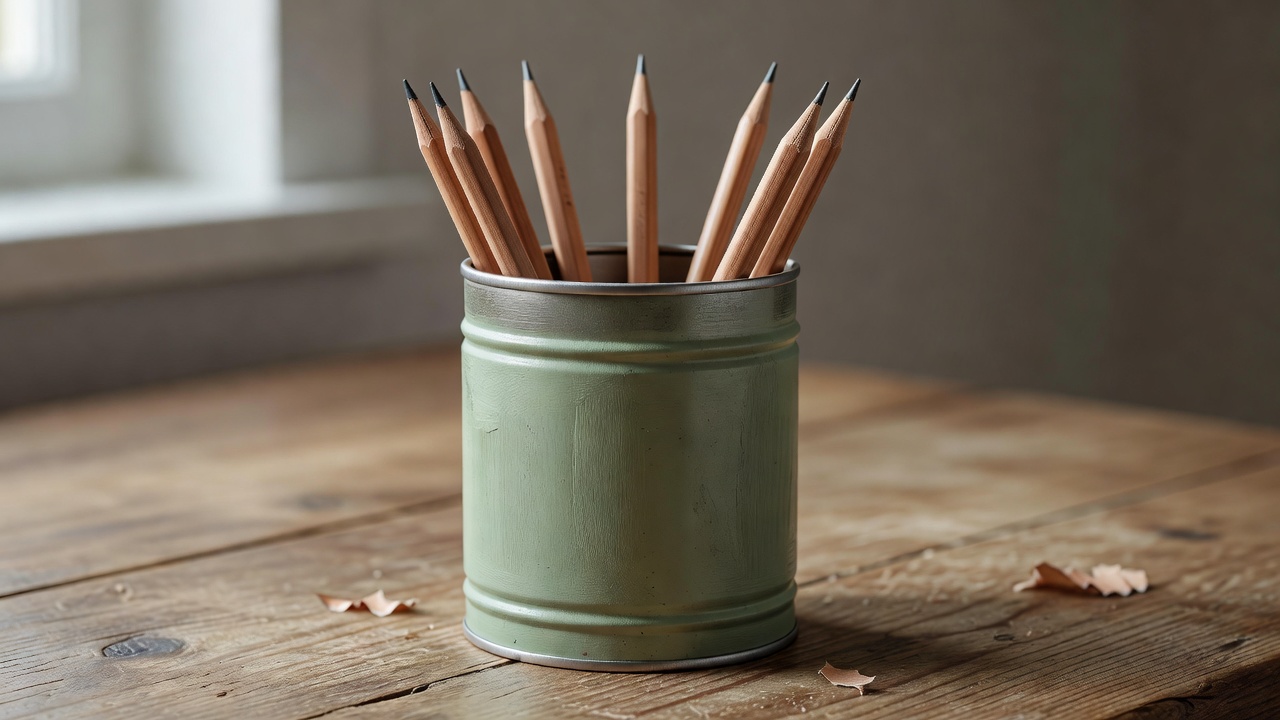
Smooth the internal rim of a clean canned-tomato tin with emery cloth. Line the inner cylinder with 2mm wool craft felt to create an acoustic desk caddy that silences falling steel scissors.
Mason Jar Twine Dispenser
Drill a clean 4mm aperture through a zinc two-piece preserving lid. Place a ball of garden jute inside and feed the center pull through the hole for snag-free dispensing without knots.
Safe Drilling Through Thin Metals
Drilling thin sheet metal requires careful mechanical restraint. Thin tin will catch on standard twist drill flutes and spin rapidly if not clamped securely.
-
01
Back the Interior with Solid Timber
Insert a snug scrap block of scrap 2x4 softwood directly into the tin canister beneath the intended drill hole. This prevents the tin walls from collapsing under vertical drill pressure.
-
02
Center Punch the Location
Tap a hardened steel nail or center punch lightly with a hammer to make a shallow dimple. This prevents your drill bit from wandering across the polished tin surface.
-
03
Drill at Low RPM
Run your drill slowly with light pressure. Remove metal shavings promptly with a brush rather than your bare fingers to avoid microscopic splinters.
Avoid excessive reliance on hot melt glue guns for structural joints. Hot glue becomes brittle in winter cold and melts on summer windowsills. Use mechanical joins, rivets, or proper mineral-based epoxies for long-term utility.