The Portable Project Tray Principle
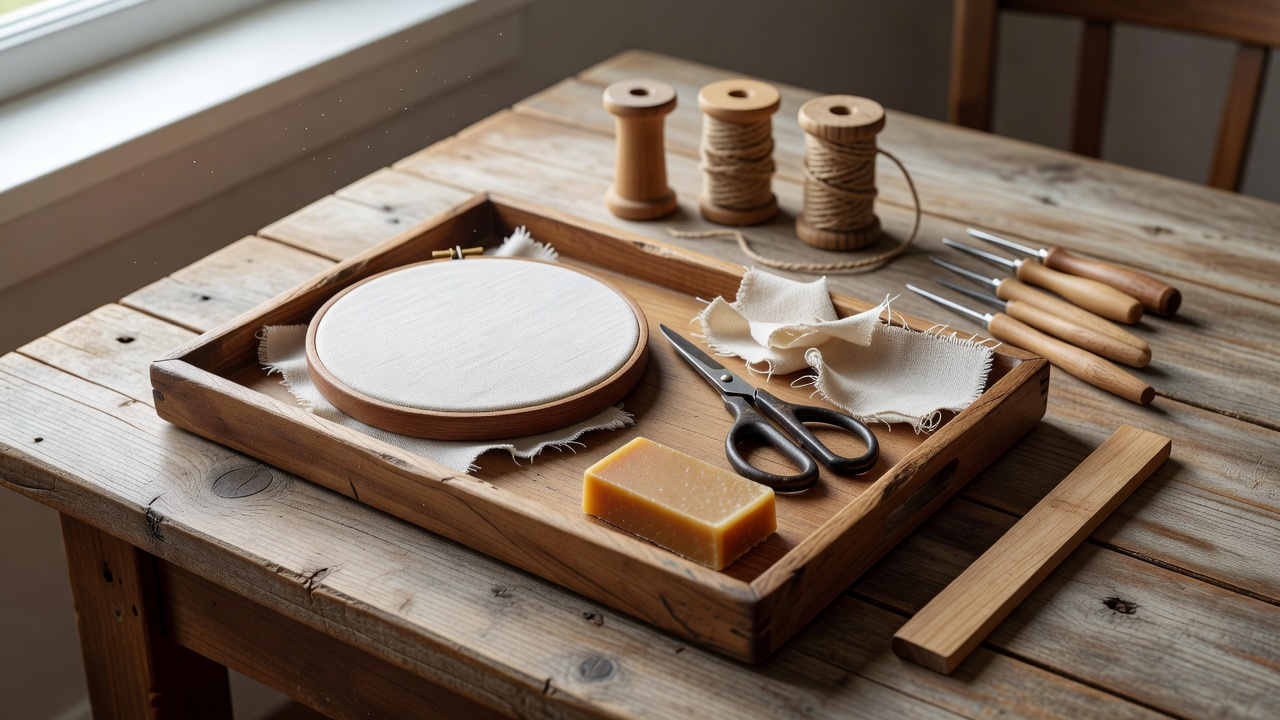
Unless you are fortunate enough to maintain a standalone workshop room, your craft table is likely also your dining surface or home computer desk. To prevent crafting from feeling like an overwhelming clutter invasion, organize your active project inside a single rimmed wooden tray (approx 35cm x 45cm).
Inside this tray reside only the active tools for today's step: your needle case, shears, cutting mat, and current materials. When dinner arrives or work calls, the tray can be lifted in three seconds and set atop a shelf without disrupting thread tension or folded paper signatures.
Overcoming Perfection Paralysis
When starting something by hand, social media feeds filled with flawless, machine-like finished goods can induce deep hesitation. Remember that craft is an empirical dialogue between mind, tool, and matter. You learn what tension paper accepts only by accidentally tearing it.
"A finished piece with uneven stitches possesses character and teaches a lesson; an unstarted project in pristine packaging teaches nothing at all."
Four Sustainable Practice Principles
Low Friction Access
Never store your primary tools behind three layers of zipped containers. Keep essential shears, rulers, and pencils visible and immediately accessible.
Micro-Milestones
Do not aim to "finish the quilt." Aim to sew four squares together this evening. Small, bounded goals create momentum and avoid fatigue.
Honest Material Selection
Begin with cheap, friendly scrap. When a piece of fabric costs almost nothing, you will experiment boldly without fear of waste.
The Resting Phase
If a seam binds awkwardly or a fold buckles, walk away for twelve hours. Fresh morning eyes unravel tangles in seconds that defeated late-night fatigue.